


Having a fast & responsive website is no longer a “nice to have” feature. In today’s digital world, it is one of the core foundations of your online success. When someone clicks on your ad, types your domain, or finds you on Google, their first real experience with your brand is your website. If that experience is slow, cluttered, or broken on mobile, you lose trust and business within seconds. If they land on a fast & responsive website that feels smooth and modern, they are far more likely to stay, explore, and convert.

From small local businesses to global e-commerce brands, every company needs a solid digital foundation. This is exactly why a fast & responsive website is important for online success in 2025 and beyond. In this blog, we’ll break down how speed and responsiveness affect user experience, SEO, conversions, and overall brand perception, and what you can do to improve your own website performance.
Users Expect Instant, Smooth Experiences
Modern users are impatient, and they have endless alternatives. If your pages take too long to load, they simply tap the back button and choose another result. A fast & responsive website meets the user’s natural expectation: click, load, and interact without delay. The faster your pages appear and the more fluid they feel, the more confident visitors are that they are dealing with a professional, reliable brand.
On the other hand, a slow site sends the opposite message. Long loading times, layout jumps, and broken elements make people feel that your business is outdated or not serious about its online presence. That is one of the biggest reasons a fast & responsive website becomes a non-negotiable requirement for any brand that wants consistent online success.
Mobile-First Behavior Demands Responsive Design
Most visitors today arrive from mobile devices. If your pages only work well on desktop screens, you are silently losing a large part of your audience. A fast & responsive website automatically adapts its layout, images, and navigation to different screen sizes, so users can read, scroll, and tap comfortably on phones and tablets.

Responsive design is not just about shrinking content; it is about reorganizing it so it feels natural on smaller screens. Clear fonts, big tap areas, simple menus, and optimized images are all part of a truly fast & responsive website. When people can easily browse your pages from the sofa, the bus, or the office, they stay longer and interact more, which directly supports your online goals.
SEO, Rankings, and a Fast & Responsive Website
Search engines like Google care deeply about user experience. They want to send people to sites that load quickly, work on mobile, and are easy to use. That is why speed and mobile-friendliness are part of modern ranking factors. If your site is slow or not mobile ready, it will struggle to compete, no matter how good your content is.
A fast & responsive website strengthens your SEO in several ways:
- Lower bounce rate, because visitors don’t leave out of frustration
- Higher engagement, as people click through multiple pages
- Better Core Web Vitals scores and page experience signals
- Faster crawling and indexing of your content
All of this helps your pages rank better and attract more organic traffic over time, which is one more reason a fast & responsive website is essential for online success.
Check your website speed using Google PageSpeed Insights.
Conversions Increase When Performance Improves
Every website has a purpose: generating leads, booking appointments, selling products, or building brand awareness. A fast & responsive website makes it easier for users to complete these goals without friction. When pages load quickly, forms are simple to use on mobile, and buttons appear where people expect them, conversion rates naturally increase.
Imagine two sites offering the same service. One is a fast & responsive website with clean design and instant feedback. The other is slow, with images that take forever to load and buttons that move as the page finishes rendering. Most users will trust and choose the first site. Performance doesn’t just influence “tech metrics”—it directly influences revenue.
See how we build a fast & responsive website with our Web Design & Development services.
If you want your ads, social posts, and email campaigns to convert better, sending visitors to a fast & responsive website is one of the most effective upgrades you can make.
Brand Perception and First Impressions
Your website often creates the first impression of your brand, long before a call or meeting. A fast & responsive website tells visitors that you care about quality and respect their time. Smooth scrolling, quick loading, and stable layouts create a sense of confidence, even if the visitor cannot explain technically what is happening.
On the other hand, visible delays, layout shifts, and broken design patterns silently damage your brand image. Visitors might not complain, but they simply do not come back. Over months and years, this gap explains why a fast & responsive website is important for online success: it shapes how people feel about you, even when they do not say it out loud.
Core Web Vitals and Real-World Performance
Google’s Core Web Vitals focus on how real users experience your pages. Metrics like Largest Contentful Paint, Interaction to Next Paint, and Cumulative Layout Shift measure how quickly content appears, how fast users can interact, and how stable the layout is.
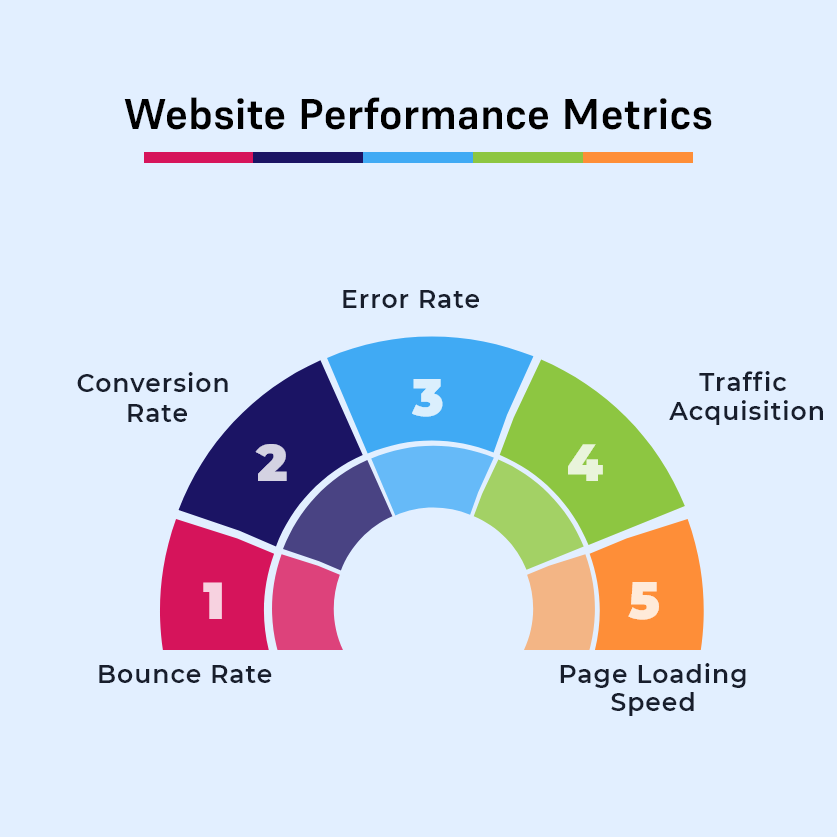
A fast & responsive website naturally performs better on these metrics because it is built with efficiency in mind: optimized images, clean code, proper caching, and quality hosting. When you improve these technical elements, you are not only pleasing Google—you are making your real users happier, which is the ultimate goal.
ractical Ways to Build a Fast & Responsive Website
Improving performance does not always require a full redesign. You can gradually turn your existing site into a fast & responsive website by focusing on a few practical steps:
- Compress and resize images before uploading them
- Use modern image formats where supported
- Remove heavy, unused scripts and plugins
- Choose a reliable hosting provider with good response times
- Enable browser caching and use a content delivery network (CDN)
- Test your layouts on multiple devices and screen sizes
- Keep your design clean and avoid unnecessary visual clutter
Each improvement brings you closer to the kind of fast & responsive website that users and search engines both love.
Competitive Advantage in a Crowded Market
In competitive industries, users compare several tabs before choosing a provider. The brand that offers a fast & responsive website with clear information often wins the click, the inquiry, and the sale. Even if your competitors have bigger budgets, you can stand out by offering a noticeably smoother online experience.
That is the hidden power of a fast & responsive website: it quietly multiplies the impact of all your other marketing efforts. Your ads, social media posts, and email campaigns work much better when they send people to a site that feels quick, modern, and easy to use.
Conclusion
By now, it should be clear why a fast & responsive website is important for online success. It affects nearly every part of your digital strategy:
- How easily people find you through search
- How they feel when they first land on your pages
- How likely they are to stay, explore, and convert
- How strongly they remember and trust your brand
Investing in a fast & responsive website is not just a technical upgrade; it is a strategic decision that supports growth, reputation, and long-term results. When your site is fast, responsive, and user-focused, every visitor has a better chance of becoming a loyal customer—and that is the real measure of online success.